

Structured for
deep work and delight.
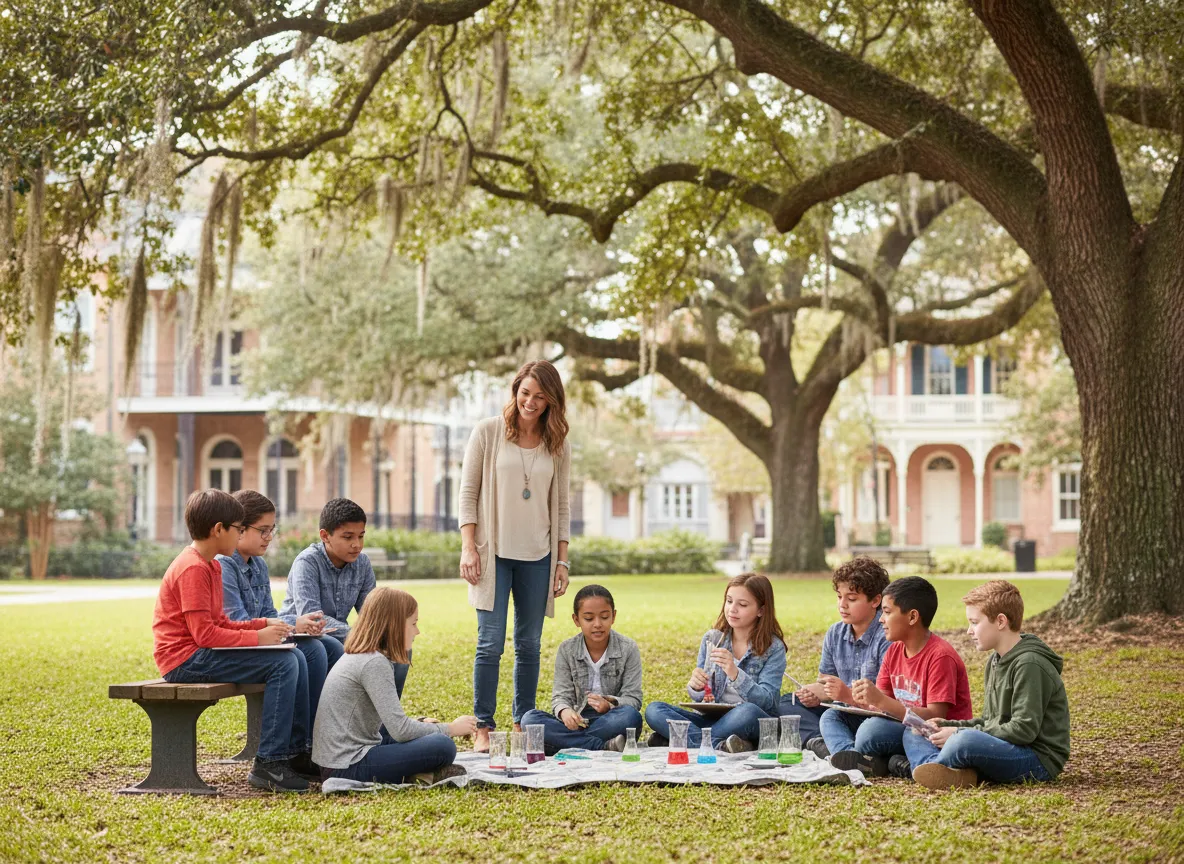
The school day is structured to prioritize deep work in the morning, with more collaborative and artistic work in the afternoon. Exact start and end times vary by grade level and are shared during the admissions process.
Apogee Savannah · Historic Downtown Savannah, Georgia

"Our approach feels more atelier than institution — rich in the arts, play, and deeply relational."

Deep work.
No distractions.
Students work through core subjects at their own pace. Coaches guide — they do not lecture.
The morning is the most cognitively demanding time of day — so we protect it for academic mastery. Students arrive, settle, set their goals for the session, and enter focused work time. There are no lectures. No whole-class instruction. Each student works where they are, on what they need most.
Coaches circulate the room, asking Socratic questions, offering gentle corrections, and challenging students who are ready to go deeper. The environment is calm, purposeful, and free from visual noise.
- A Seeker working through a reading comprehension exercise, narrating back what they understood to their coach
- A Navigator drafting a persuasive essay and revising it based on coach feedback — twice, before being satisfied
- A Pathfinder working through advanced mathematics independently, flagging a question for their next check-in
- A morning huddle where students share something they learned, practiced, or noticed — building confidence in spoken communication

Rest is not
wasted time.
Each day has intentional, unstructured play according to the development of the child to aid in their growth.
We do not fill midday with structured activities. Children need time to be children — to run, talk, imagine, and simply be. Free play is not a reward for completing work. It is essential to healthy development, and we protect it accordingly.
Lunch is eaten together. Conversation is unhurried. Students have space to restore their focus before afternoon work begins. This rhythm respects the natural energy cycles of children — and of adults.
- Children eating together at a shared table — actual conversation, no devices
- Outdoor free play: running, building, inventing games together without adult direction
- Younger students in imaginative play; older students in genuine peer conversation
- Physical activity as part of every day — not scheduled PE, but natural, joyful movement
Learning that
makes something.
Students collaborate, create, and learn through doing — entrepreneurship, workshop arts, and real-world skills.
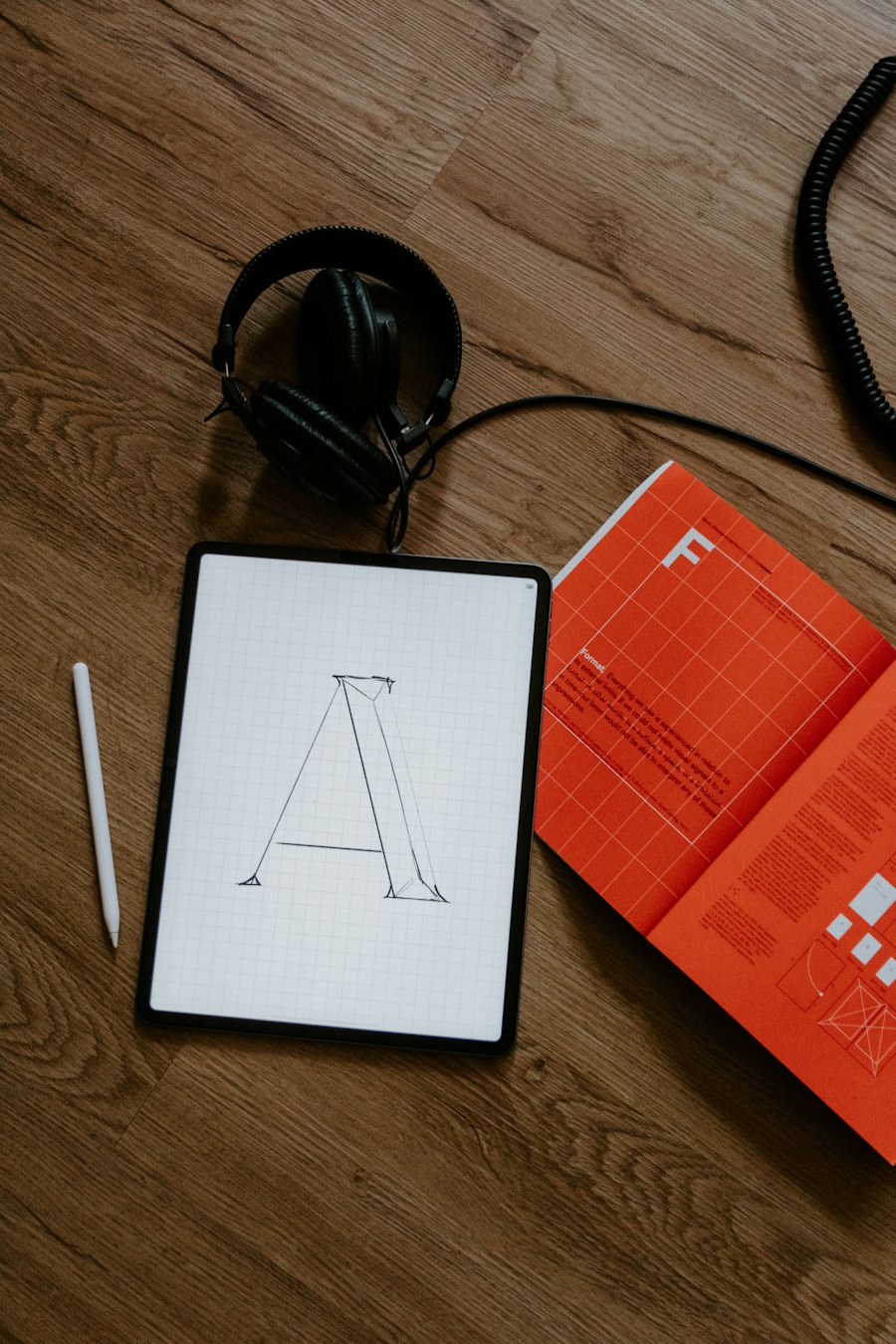
Afternoons are for applied learning — project work, creative production, and mentorship. Students are asked to make things, not just answer questions. The afternoon reveals whether the morning's academic work has truly been absorbed.
Coaches shift into deep mentorship mode — one-on-one conversations, guiding projects, and helping students connect their academic skills to real challenges that matter beyond the classroom walls.
- Seekers working on a nature journal — observing, drawing, and describing what they found outside
- Navigators collaborating on a persuasion project: researching a real issue, building an argument, and presenting it
- Pathfinders meeting with an apprenticeship mentor in Savannah's professional community
- Studio arts: painting, drawing, building — creative expression woven into every week, not saved for "art day"
"Our approach is intentionally no-tech in the early years, rich in literature and the arts, play and deeply relational — supporting families who desire an environment that feels more atelier than institution."Apogee Savannah
What to expect
at pickup.
A supportive learning environment; thoughtful rhythms to the day; and a culture that prizes respect, responsibility, and joy in the work of learning.
Because students set their own goals each morning, they know exactly what they did and why. Your child will have a real answer to "how was your day?"
Not the glazed fatigue of screen time, but the healthy tiredness that comes from focused thinking, physical play, and creative making.
We do not assign homework to allow for quality time with family and valuable learning alongside adults in the rhythms of family life. Your evenings are yours.
Technology is used deliberately and purposefully. Canvas and paper first — especially in the early years. The environment is free from visual noise.
No child is held back or pushed forward against their readiness. Every student advances when they are truly ready — not when the calendar says so.
Our campus is calm, curated, and warm. High-expectation culture — firm but never harsh. Students are respected as capable individuals with real responsibilities.
Exact start and end times vary by grade level and are shared during the admissions process. Apogee Savannah follows a traditional academic-year calendar with intentional breaks that honor family rhythms and major holidays.
We do not assign homework to allow for quality time with family and valuable learning alongside adults in the rhythms of family life. The school day ends at school.
Students who complete their work advance to the next challenge or engage in independent reading and enrichment. There is no "done" — there is always something deeper to explore.
Our small workshop size allows us to differentiate between students according to their gifts and challenges. Coaches know every student closely and address focus concerns with both structure and care.
The rhythm is consistent — morning mastery, midday play, afternoon projects — but the content of the afternoon varies. Some days are individual project work; others are collaborative, field-based, or workshop-led.
We honor that trust by walking closely with families — communicating clearly, listening carefully, and holding a high standard of integrity. You will never wonder what your child is working on or how they are progressing.
The best way to understand
Apogee is to experience it.
Join an upcoming family meetup, or schedule a private conversation to see the daily rhythm in action and meet our team. No pressure — just a real discussion about what's right for your family.
Average response time: one business day.
Book an Information Session
with the Founder.
Prefer a one-on-one conversation from home? Book a relaxed 30-minute Google Meet directly with Brit Claus — our founder. She'll walk you through a typical day, answer your questions, and help you decide if Apogee is the right fit for your family.
Book a Google Meet with Brit ClausA relaxed 30-min video session · All conversations are private.
Stay in the loop.
Upcoming events, enrollment news, and updates from our community.